An Introduction to a Meaningful Life
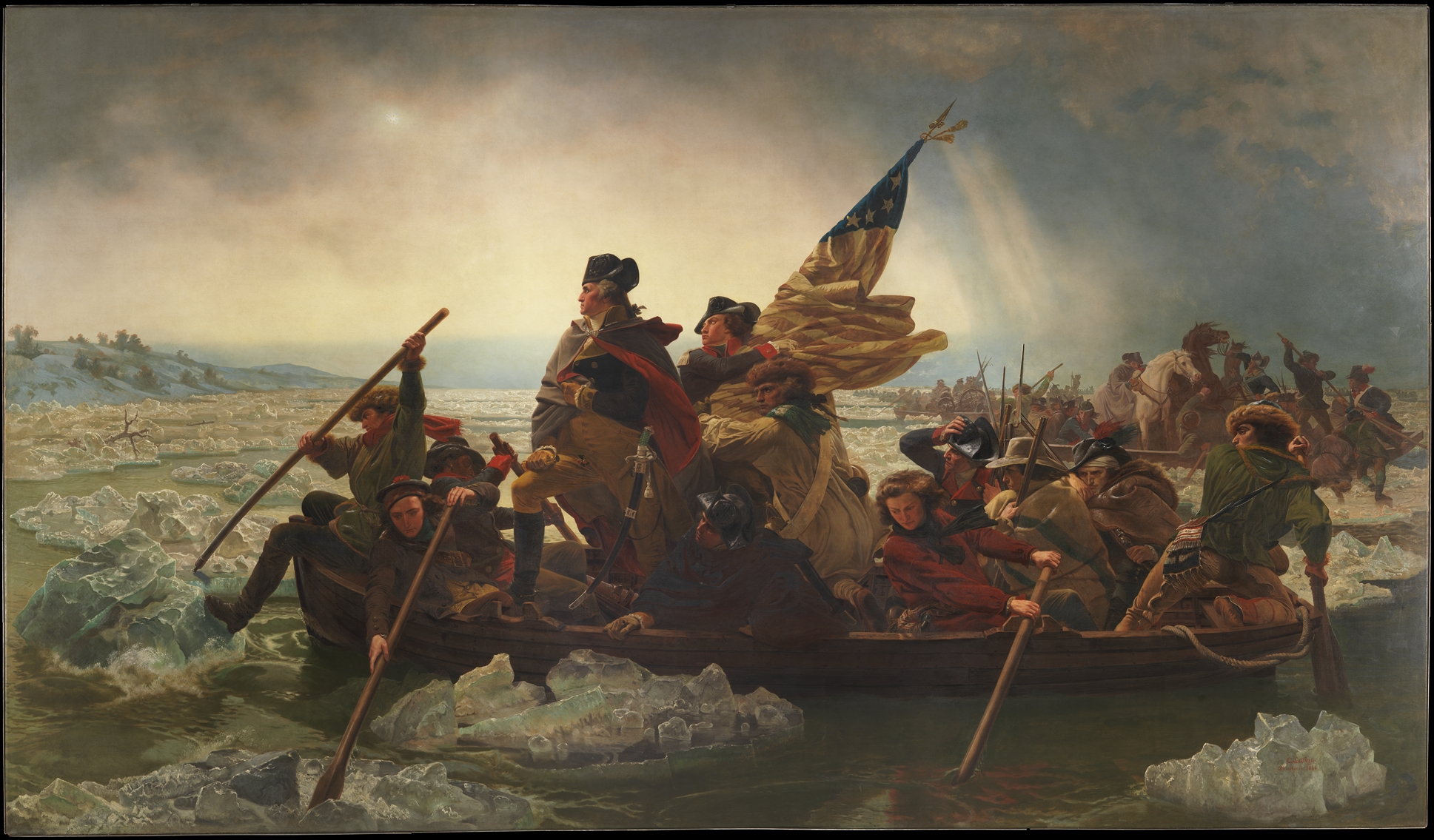 Washington Crossing the Delaware Emanuel Leutze German American 1851
We hold these truths to be self-evident, that all men are created equal, that they are endowed by their Creator with certain unalienable Rights, that among these are Life, Liberty, and the pursuit of Happiness1
On July 4, 1776, Congress signed the Declaration of Independence. Seven years later, Great Britain formally recognized the United States as an independent and sovereign nation with the signing of the Treaty of Paris on September 3, 1783, marking the end of the American Revolutionary War.
The Founding Fathers declared that “to secure these rights, Governments are instituted among Men, deriving their just powers from the consent of the governed.”2 Thus, a new government was born: “Government of the people, by the people, for the people.”3
Although, as Honest Abe astutely observed, not all Americans were represented equally by the government that was ostensibly created in their service. This tension existed from the origins of the U.S. Constitution until the ratification of the 13th Amendment in 1865.
Representatives and direct Taxes shall be apportioned among the several States which may be included within this Union, according to their respective Numbers, which shall be determined by adding to the whole Number of free Persons, including those bound to Service for a Term of Years, and excluding Indians not taxed, three fifth of all Persons.4
“All persons” was a euphemism referring to slaves. The North could share the new nation’s tax burden more equitably while the South was able to get more representatives in the House. Three-fifths compromise.
And what of the population of Americans that were subjected to the evils of slavery from 1783-1865? According to the University of Wisconsin,5 there were 694,207 total slaves in the United States in 1790. By 1860, that number was 3,950,546.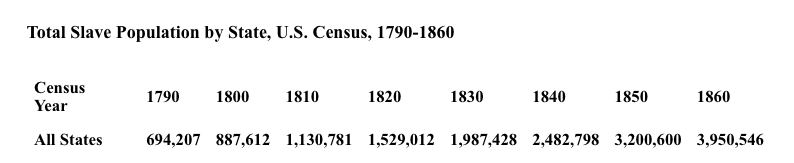
Unfortunately, there was not much that could be done as a slave, right? If you found yourself in those conditions, what hope was there in the future? Imagine being born into a cruel world that doesn’t recognize your humanity, only your economic viability. Reality is shaped by the ideologies of those in power. What percentage of a human am I? That is a matter of the federal government to decide.
Although a single slave likely did not have the power to end slavery, there were opportunities to pursue liberty. An example of bodily freedom comes from the Underground Railroad, where upwards of 500,000 enslaved peoples self-emancipated from their owners.6 We also see examples of resistance of the soul from the development of new genres of music such as American Spirituals, among others, that evolved over last next few hundred years into many variations of popular contemporary music.
Originating among enslaved African-Americans during the Antebellum era, the spiritual is one of the most important genres of American music. These songs were traditionally sung in various functions and provided enslaved peoples with hope for freedom through religious and coded messages. “Wade in the Water” was one such spiritual and served as an important song along the Underground Railroad—leading enslaved peoples to escape by water to avoid tracking dogs and in religious settings as a baptismal song.7
Not all slaves, however, believed in pursuing the small opportunities that were presented to them. In Narrative of the Life of Frederick Douglass, Douglass recounts discrepancies between the actions of his fellow slaves. Some took free time as an opportunity, finding small ways to improve their lives; Others used the opportunity for escape into what hedonism was allowed them. Hedonism sanctioned (i.e. encouraged) by the slaveholders themselves.
The days between Christmas and New Year's day are allowed as holidays; and, accordingly, we were not required to perform any labor, more than to feed and take care of the stock. This time we regarded as our own, by the grace of our masters, and we therefore used or abused it nearly as we pleased. Those of us who had families at a distance, were generally allowed to spend the whole six days in their society. This time, however, was spent in various ways. The staid, sober, thinking and industrious ones of our number would employ themselves in making corn-brooms, mats, horse-collars, and baskets; and another class of us would spend the time in hunting opossums, hares, and coons. But by far the larger part engaged in such sports and merriments as playing ball, wrestling, running footraces, fiddling, dancing, and drinking whiskey; and this latter mode of spending the time was by far the most agreeable to the feelings of our masters. A slave who would work during the holidays was considered by our masters as scarcely deserving them. He was regarded as one who rejected the favor of his master. It was deemed a disgrace not to get drunk at Christmas; and he was regarded as lazy indeed, who had not provided himself with the necessary means, during the year, to get whisky enough to last him through Christmas.
From what I know of the effect of these holidays upon the slave, I believe them to be among the most effective means in the hands of the slaveholder in keeping down the spirit of insurrection. Were the slaveholders at once to abandon this practice, I have not the slightest doubt it would lead to an immediate insurrection among the slaves. These holidays serve as conductors, or safety-valves, to carry off the rebellious spirit of enslaved humanity. But for these, the slave would be forced up to the wildest desperation; and woe betide the slaveholder, the day he ventures to remove or hinder the operation of those conductors! I warn him that, in such an event, a spirit will go forth in their midst, more to be dreaded than the most appalling earthquake.
The holidays are part and parcel of the gross fraud, wrong, and inhumanity of slavery. They are professedly a custom established by the benevolence of the slaveholders; but I undertake to say, it is the result of selfishness, and one of the grossest frauds committed upon the down-trodden slave. They do not give the slaves this time because they would not like to have their work during its continuance, but because they know it would be unsafe to deprive them of it. This will be seen by the fact, that the slaveholders like to have their slaves spend those days just in such a manner as to make them as glad of their ending as of their beginning. Their object seems to be, to disgust their slaves with freedom, by plunging them into the lowest depths of dissipation. For instance, the slaveholders not only like to see the slave drink of his own accord, but will adopt various plans to make him drunk. One plan is, to make bets on their slaves, as to who can drink the most whiskey without getting drunk; and in this way they succeed in getting whole multitudes to drink to excess. Thus, when the slave asks for virtuous freedom, the cunning slaveholder, knowing his ignorance, cheats him with a dose of vicious dissipation, artfully labelled with the name of liberty. The most of us used to drink it down, and the result was just what might be supposed: many of us were led to think that there was little to choose between liberty and slavery. We felt, and very properly too, that we had almost as well be slaves to man as to rum. So, when the holidays ended, we staggered up from the filth of our wallowing, took a long breath, and marched to the field,—feeling, upon the whole, rather glad to go, from what our master had deceived us into a belief was freedom, back to the arms of slavery.8
Rather than condemn those who were less “thinking and industrious,” I stand in awe at those who were able to rise above their circumstances, sacrificing a moment of escapism to instead prepare for a better future.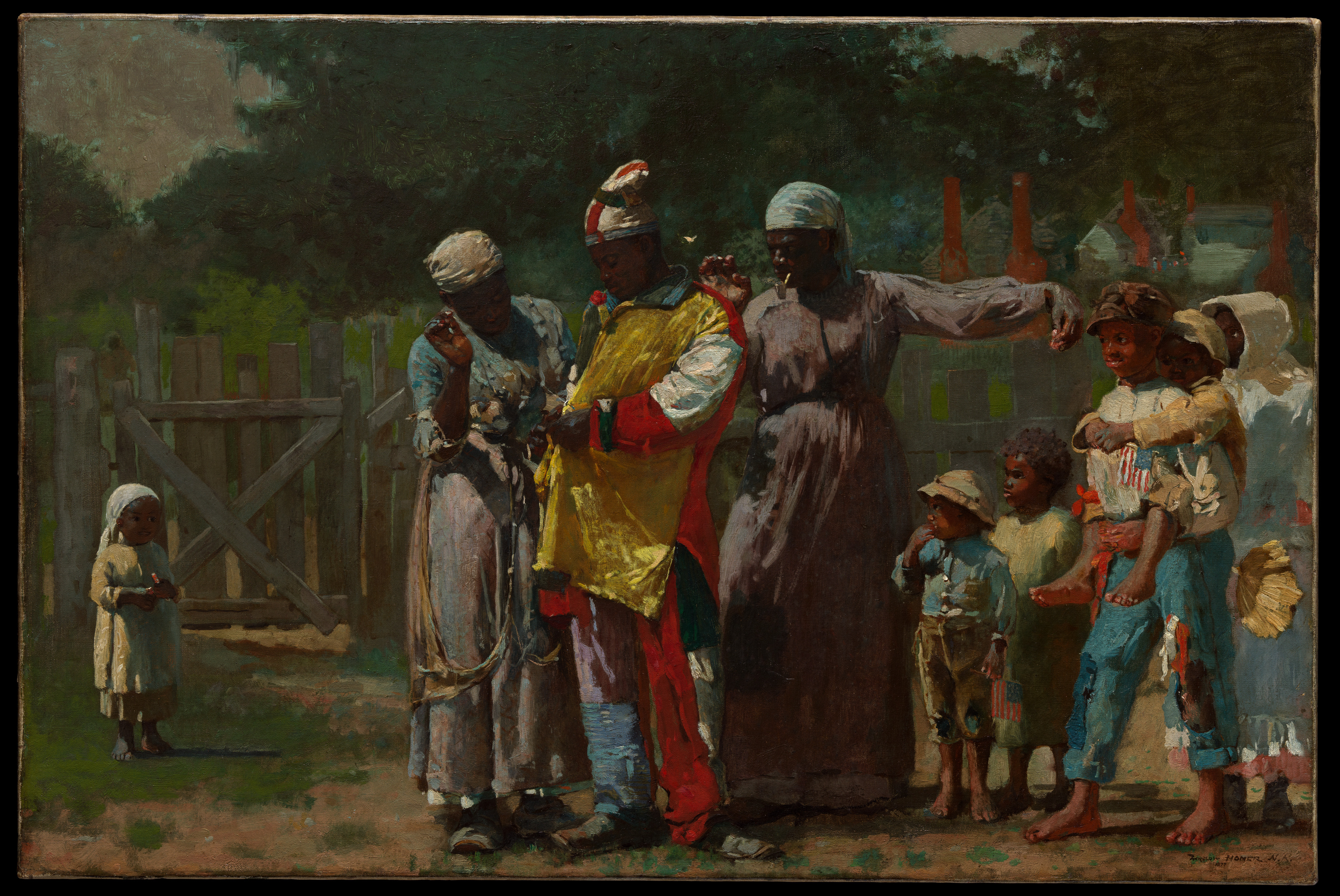 Dressing for the Carnival, Winslow Homer American 1877
January 31, 1865, Congress passed the 13th Amendment, abolishing slavery in the United States. December 6, 1865, it’s ratified, officially making it part of the supreme law of the land.
Section 1. Neither slavery nor involuntary servitude, except as a punishment for crime whereof the party shall have been duly convicted, shall exist within the United States, or any place subject to their jurisdiction.9
The vast majority of African American slaves were freed as a result of the 13th Amendment. Realistically, American slaves likely would not have been able to abolish slavery by themselves; however, they still had the opportunity to find hope. Some were able to find freedom.
In 2025, there are not any slaves in the United State of America, at least in the way that they existed in the early 19th century. There are, though, many present day Americans who find themselves bound to seemingly insurmountable debt. These financial constraints engender feelings of hopelessness for a better life. According to LendingClub:
Sixty-nine percent of consumers in urban areas live paycheck to paycheck, which is 25% more than their suburban counterparts, 55% of whom live paycheck to paycheck. Additionally, 63% of rural consumers reported living paycheck to paycheck. These regional concentrations of paycheck-to-paycheck consumers could be attributed to the high percentage of millennials living in urban areas (48%) as well as the large share of baby boomers and seniors — many of whom are retired and living on a fixed income — living in rural areas (32%). Additionally, the share of consumers living paycheck to paycheck is generally even across regions, although the West saw the steepest increase year over year, rising from 59% in April 2022 to 64% in April 2023. This indicates that the rising cost of living has impacted consumers in the West the most. 10
A slightly dissenting opinion from the Federal Reserve’s Report on the Economic Well-Being of U.S. Households in 2023 - May 2024 states:
In 2023, 54 percent of adults said they had set aside money for three months of expenses in an emergency savings or "rainy day" fund—unchanged from 2022 but down from a high of 59 percent of adults in 2021.11
Considering inflation over the past five years (peaking at 9.1% in June 2022),12 a souring U.S. job market,13 and an average debt of over $105,000,14 I think it’s fair to say the vast majority of average Americans are starting to feel some pain. 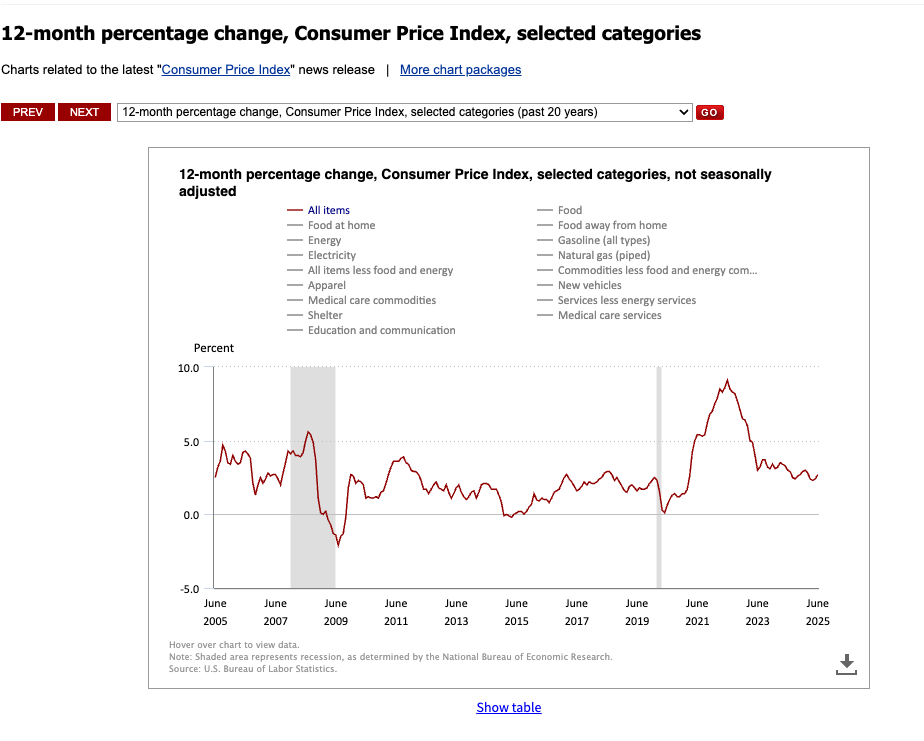
 U.S. Bureau of Labor Statistics
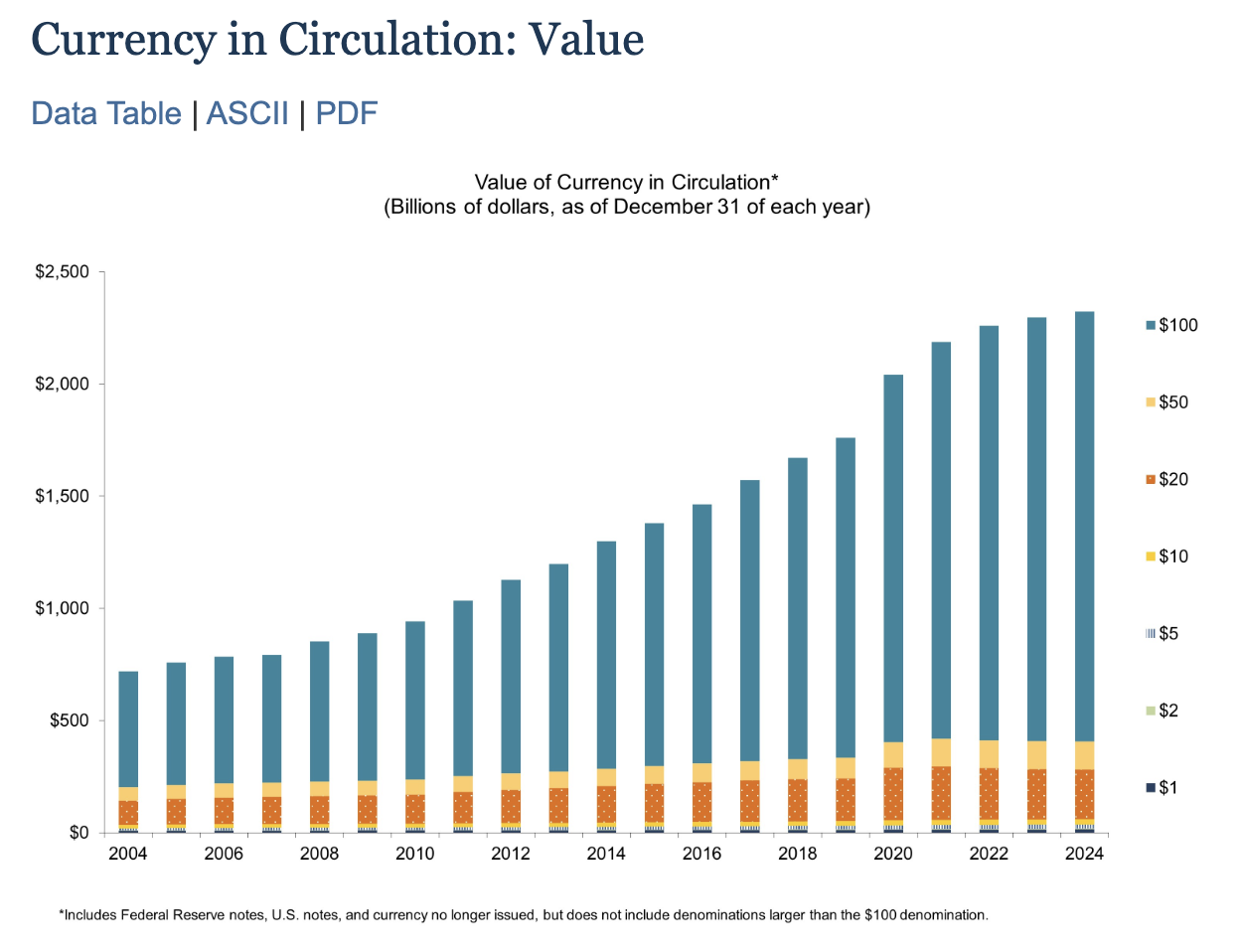 money printer go brr — Federal Reserve
With pain comes decisions. What are some natural reactions?
Blame someone or a group of people 1.
Escape into hedonism and nihilism 1.
Pursue meaning, maintain our humanity, and believe in a better future
Blame someone or a group of people
I am afraid of the rising anger I see online. Arguably, this is the nature of Twitter but it seems like there has been a recent uptick in that last year. 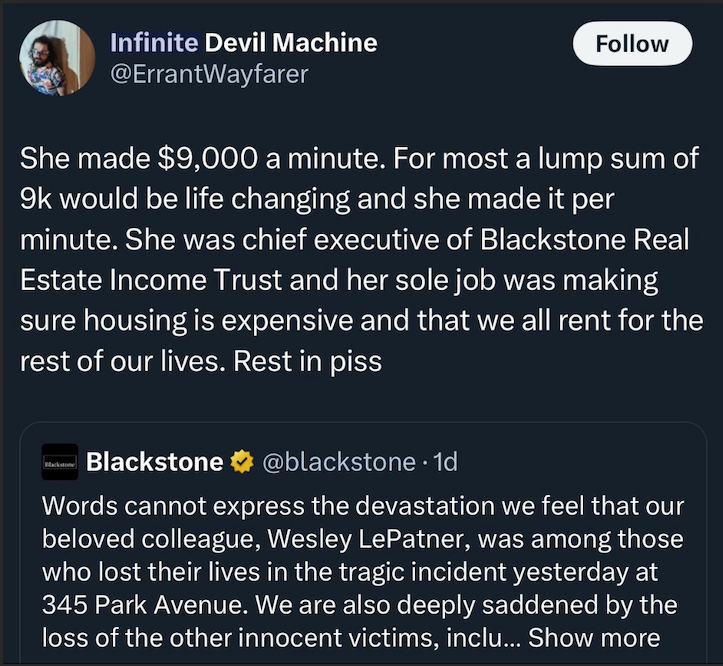
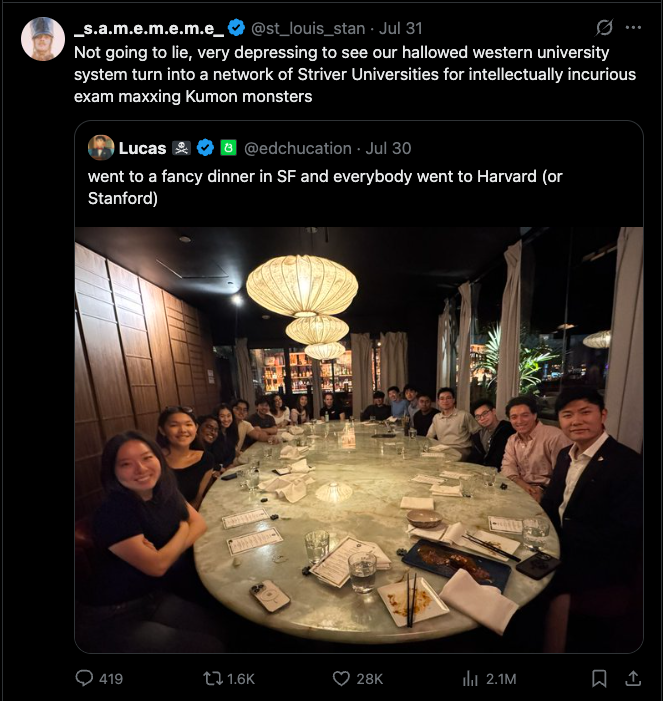
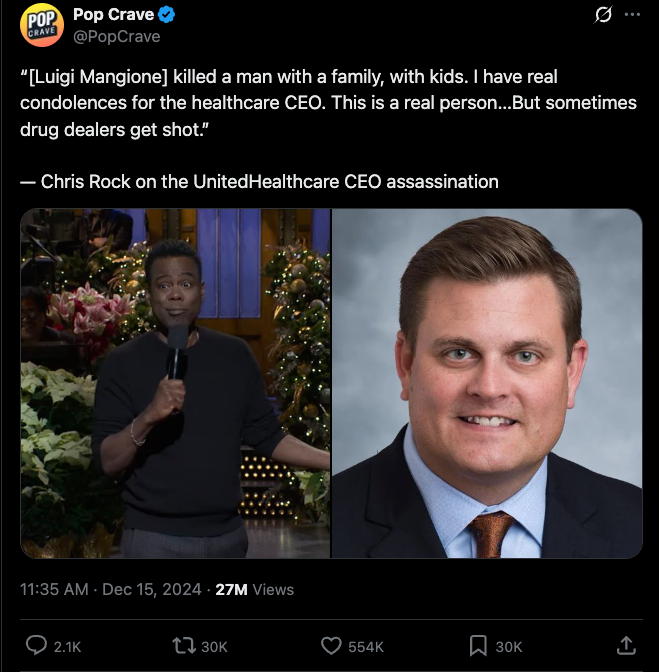
These examples fall into category 1. “I am doing poorly because of x,” leads to bitterness, hatred, antisemitism, racism, etc. This isn’t denying the realities of wealth inequality in this country. In response to difficult times, everyone must ask themselves, what am I realistically able to do? Murdering some rich CEO is not the answer. What does a society devolve into where any random vigilante feels emboldened to administer their own definition of justice without due process?
On September 28, 1789, in a letter to Edmund Randolph—a Founding Father, attorney, and the seventh Governor of Virginia—George Washington wrote:
Impressed with a conviction that the due administration of justice is the firmest pillar of good Government, I have considered the first arrangement of the Judicial department as essential to the happiness of our Country, and to the stability of its political system; hence the selection of the fittest characters to expound the law, and dispense justice, has been an invariable object of my anxious concern.15
This idea is so important it is written on the New York State Supreme Court Building.16 *New York State Supreme Court Building 2025 Taken by Yours Truly *
The solution is probably not simple. I am extremely skeptical of any potential ‘quick fix’ that is touted as obvious and easily implementable, which predictably throws out the baby with the bathwater.
I have faith in the efficacy of the systems the Founding Fathers implemented. Our nations origins weren’t flawless but they laid a solid foundation. Imperfections can be amended and power is distributed. Violence will not solve our problems. Instead, it would spiral us further into darkness and despair.
Justice
What is justice? From Merriam-Webster, “1a: the maintenance or administration of what is just especially by the impartial adjustment of conflicting claims or the assignment of merited rewards or punishments. 2a: the quality of being just, impartial, or fair. 3: conformity to truth, fact, or reason.” Justice as a quality of fairness and truth further elucidates its importance. A decision must be enacted on these grounds.
What is worrisome are examples from the current administration that explicitly turn away from justice. Erika McEntarfer’s, the director of the Bureau of Labor Statistics, firing17 demonstrates this.
Our government can still act for the benefit of the people, however, and I have faith in their ability to deliver on the oaths they made to defend the Constitution. Instead of tearing down the system as a whole we can make a small impact through the democratic process. Starting with local governance, we can improve the communities that we live in and expand from there.
Any government can overreach, which should come with harsh consequences, but I don’t think we’re at this point (yet):
That whenever any Form of Government becomes destructive of these ends, it is the Right of the People to alter or to abolish it, and to institute new Government, laying its foundation on such principles and organizing its powers in such form, as to them shall seem most likely to effect their Safety and Happiness. Prudence, indeed, will dictate that Governments long established should not be changed for light and transient causes; and accordingly all experience hath shewn that mankind are more disposed to suffer, while evils are sufferable, than to right themselves by abolishing the forms to which they are accustomed. But when a long train of abuses and usurpations, pursuing invariably the same Object evinces a design to reduce them under absolute Despotism, it is their right, it is their duty, to throw off such Government, and to provide new Guards for their future security.18
Escape into hedonism and nihilism
Hedonism and nihilism do not believe in a better future. Hedonism posits that pleasure is the highest good and the primary motivator for human action while Nihilism argues that life is without objective meaning (obvious simplifications).
The American Slaves that Douglass criticized were practicing some sort of escapism from their terrible reality; in the 21st century there exist troubling parallels.
Everywhere I look, I see opportunities to escape my reality. Each escape hatch varies in potency. Human psychology was hacked by all b2c industries. Evolution was used against us.
Once we give up hope, though, turning from the light into darkness is inevitable. The beginning of that path always feels innocuous. If you spend your years digging a hole, eventually, you won’t be able to get out. Give corporations an inch and they’ll take a mile.
Addiction
What is addiction? According to the Cleveland Clinic,19 there are two groups of addictions that relate to either substance use or behavioral disorders. Both are categorized by the following symptoms: inability to stop, increased tolerance, intense focus on the substance or activity, lack of control, personal problems and health issues, withdrawal. Addictive substance examples: alcohol, caffeine, cannabis, opioids, tobacco/nicotine, and prescription and non-prescription stimulants (Adderall, cocaine, meth). Addictive non substances examples: gambling, eating, exercising, dieting, shopping, sex, pornography, and risky behaviors such as shoplifting,
Importantly, addiction is not the result of lack of willpower or morality. Addiction alters your brain chemistry. Different stimuli is going to effect everyone differently. Some people are a more at risk demographic because of how their brain’s reward system interacts with specific stimuli. Moreover, having an addiction doesn’t mean you completely lose control. There are many well documented cases of functional alcoholics, for example.
Unfortunately, we no longer live in a society that cares to protect its vulnerable. Everything is accessible via a casino that sits in your pocket. Legislation is enabling sports betting, online gambling, pornography. Modern social media is not about connecting you with your friends. Now, the algorithm determines what you consume, serving content specifically tailored to keep you engaged. When you pull your feed down to refresh the page, you are pulling the lever of a slot machine.
Youtube’s most valuable metric is watch time20 and they are going to do whatever it takes to increase that number. Instagram, TikTok, Twitter—we live in an attention economy. David Foster Wallace is rolling in his grave.21
You might respond, “and what about justice? From earlier? Let the people decide what they partake in.” That is a fair point. America: the land of the free. Should all citizens be able to harm themselves in whatever way they deem fit? Sure. However, the government has a responsibility to protect its citizens from corporations as well. In the same way that antitrust laws are meant to protect us from monopolies, drug and gambling laws mitigate the amount of harm someone could do to themselves emotionally or financially.
At least before the rise of online gambling there was some friction to gambling. Someone might have to drive a number of hours to go to the casino. They could gamble on horses at the race track but it took effort to get there and it happened over a set amount of time.
Now, the experience is completely frictionless (as all good tech is designed to be) and losing your money couldn’t be easier. I find it disturbing how ubiquitous sports gambling has become. You can’t watch any sports broadcast without constantly being marketed the betting app the program itself is sponsored by. For example: Sponsored by FanDuel January 2nd, 2025
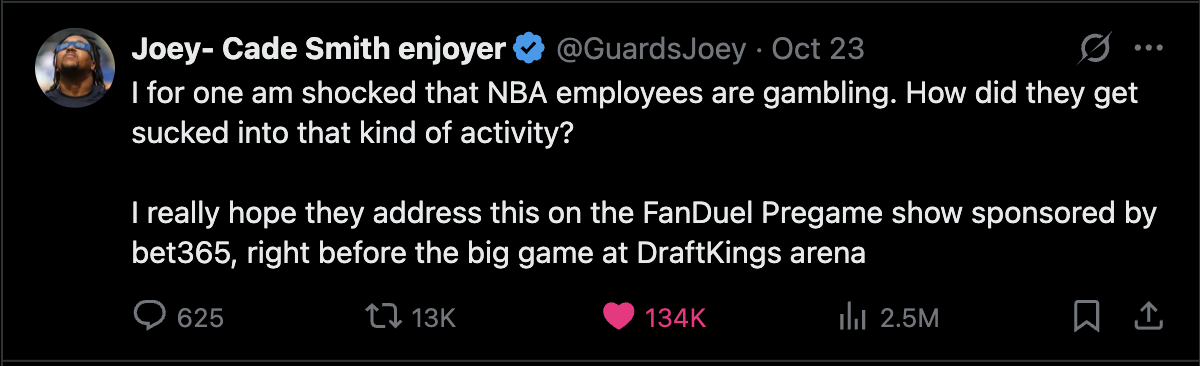
There are a plethora of sign up deals that these sports betting applications are willing to offer. Courtesy of cbssports
It doesn’t take a genius to figure out why. All drug dealers know that selling their product at a discount, if not for free, is a lucrative customer acquisition strategy. Once the client is hooked, the dealer can charge whatever they want. It comes back to the first two symptoms of addiction: inability to stop, increased tolerance. The first time you risk any amount of money and win, you’re going to feel an insane rush. Actually, it doesn’t matter if you win or not.22 You know that feeling (heart pounding, hands sweating, pupils dilated) when you’re watching whatever you bet on and you think: imagine if this hits? That’s flowing dopamine. You’ve received a huge neurotransmitter reward and you will want that feeling again. In fact, because you don’t know the outcome, your brain releases more dopamine than if you had known the outcome.23
The issue is that dopamine is what motivates humans to action. Historically, the way to get dopamine was by attempting hard things, but now dopamine is in abundance. This cheap dopamine, predictably, discourages us from any real action, usually requiring some other pharmacological intervention (e.g. caffeine, stimulants) which also gives us huge dopamine dumps. Our brain chemistry is the result of hundreds of thousands, arguably billions, of years of evolution. The human brain is the most complicated thing in the universe and we’re artificially inhibiting it constantly.
Adults should be allowed to make decisions for themselves about how they want to live their lives. Everyone should assess risky situations and decide what their tolerance is. My problem, however, is the way that potentially dangerous, highly addictive activities are presented to the public. I do not believe that every citizen in the United States is given the same education on how their brain functions or how addiction works. No one thinks they’ll become an addict. This isn’t a matter of intelligence, instead it is about context.
Look at cigarettes. When the culture deems ‘ciggies’ as cool, the overall number of consumers increases. More consumers equals more lung and throat cancer. More death. As a protective measure, the U.S. Food & Drug Administration has strict laws about cigarette advertising.24 The public has been educated on the potential negative effects but the product is still purchasable.
Personally, I like the cigarette packaging in South Korea: 
Currently, there is enough awareness for the average American to be able to make informed decisions around sports gambling. It is disingenuous to say that adults should have a choice in this matter when most don’t have the context of its dangers.
Did you know that gambling addiction has the highest rates of suicidality?
Gambling-related harm could be diverse, with homelessness, domestic violence, debt, family breakdown, depression, and suicide occurring commonly.[6] Gambling disorders have been strongly associated with comorbid substance use disorders, anxiety, and depression. In fact, more than 90% of the population with GD have a diagnosable mental disorder and more than 60% have three or more co-occurring psychiatric disorders.[7] These associations are particularly strong among young people who gamble on the internet.[8] Those with high-risk gambling behaviors also have an increased risk of suicidality. Eight studies from USA reported that those with GD had the highest suicide rate of any addiction disorder with one in five GD patients having attempted suicide.25
Similarly, given what we know about how social media interacts with the human brain, there is not enough awareness of its potential harm. Only recently is the data starting to become available.
In the U.S., suicide rates have declined slightly since 2019, but it continues to be a serious concern among our younger generation. According to the Centers for Disease Control and Prevention, the number of suicides in females aged 15-24 increased 87 percent over the past 20 years. And among males aged 15-24, the number of suicides rose by 30 percent over that same time period.26
Creating a definitive link between youth suicide and depression with social media is challenging, but there is plenty of evidence to suggest at least a significant relationship.
Again, this comes down to education and awareness of potential dangers. Young people are ostensibly protected against illicit drugs but what guard rails are there from software?
My guess is that parents with more awareness on how phones interact with their child’s brain are more protective. They likely give their children phones at a later age and enable parent controls and time limits. Can we make parents behave a certain way? No. That doesn’t mean that awareness campaigns wouldn’t be able to better inform citizens to make the most sense for their family.
My hope for our society is greater awareness at the level of risk different activities represent. The government should not be so obsessed with stock market valuations that it sacrifices the people it represents. It already is a war of attrition of citizens versus corporations. At minimum, the conditions of the game should be equal. Otherwise, average people simply do not stand a chance.
Admittedly, sports gambling excites me. So much so that I refuse to download any of the apps. I know that I would get hooked. With other substances, however, I try to toe the line. I get a small dosage and tell myself that I’m going to leave it at that.
One such substance is caffeine. I LOVE CAFFEINE. I love the bitter smell, the dark look, the sound of it hitting the bottom of my favorite mug. At the cafe, I will literally rub the warm mug on my face. After a few months of abstinence, the first cup gives me such a rush. And I’m not the only one:
[Michael] Pollan put a lot of thought and planning into where he would enjoy his first cup of coffee. And he felt the effects almost immediately. "In a way, one of the most powerful drug experiences I've ever had in my life was my first cup of coffee after three months off. It was psychedelic. It was incredible," he says. "I just felt these waves of wellbeing, then it turned into euphoria... It was like cocaine or something."27
My problems start after a few weeks of consumption. Initially, I can feel the caffeine take over my whole body. I have so much energy and so many ideas. I can blast music in my headphones and WORK. Everything around me melts away and before I know it, the day is done. Then, slowly my tolerance builds. Every morning I face a slightly larger battle against withdrawal. My sleep gradually worsens. I am more and more tired. I become a tinge more irritable. The only way to get any semblance of those initial feelings means upping the dosage. I start with 35 mg. Then 75, 125, 150, 175. It never ends. Given the ever growing amount of caffeine from various venders, I doubt I am alone. Panera had to pull their ‘Charged’ Lemonade after facing lawsuits, which had 265mg of caffeine.28
According to the FDA, up to 400 mg is “an amount not generally associated with negative effects.”29 Meaning that 400 mg is the ceiling you can consume in a day before potentially facing harm. This number is based on the average adult. Not everyone processes caffeine the same way and factors like weight also impact the result of the drug. This also means that for many of the most popular caffeinated drinks on the market, if you consume two drinks within a single day, you are likely to be over the 400 mg ceiling. 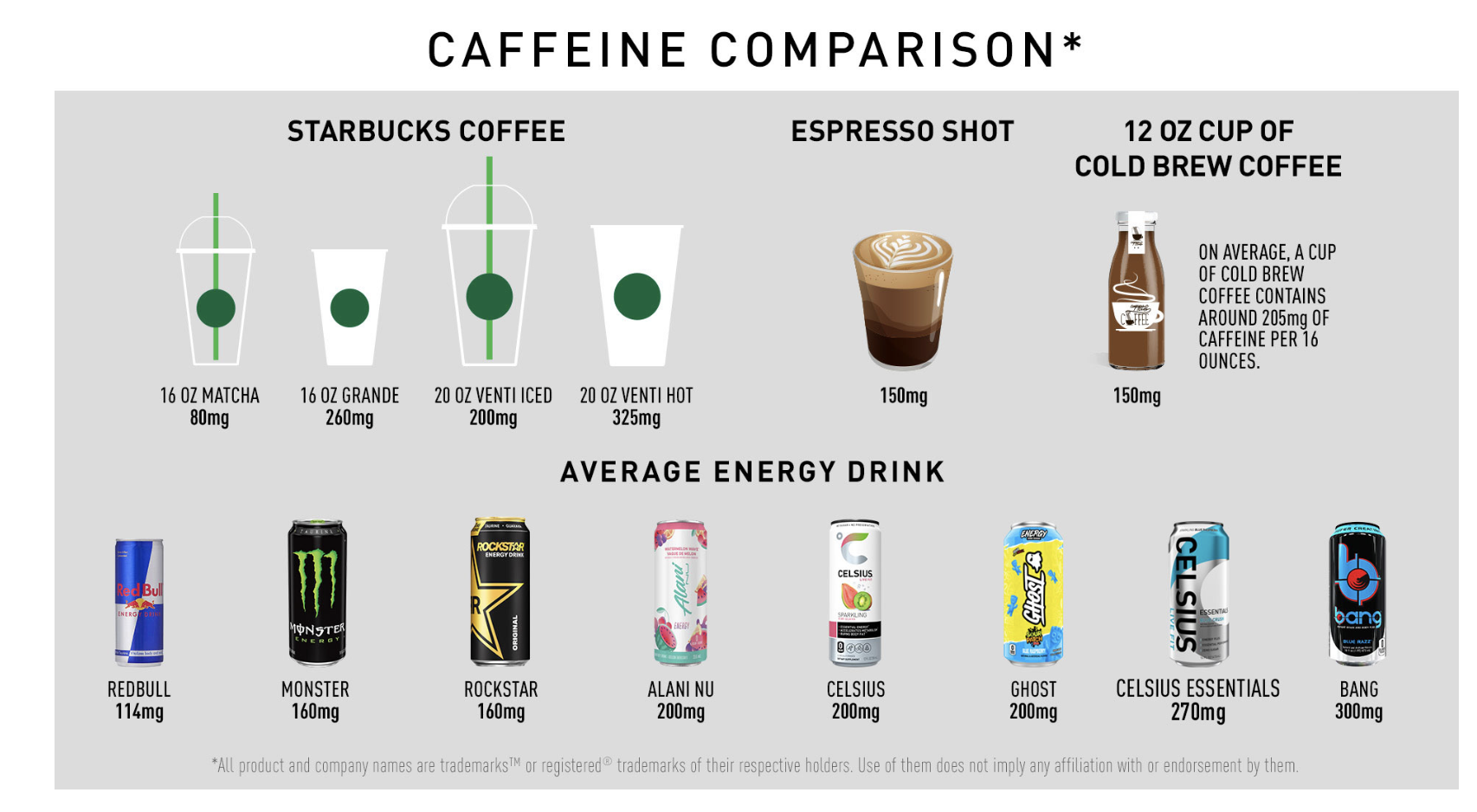 celsius.com
My experience with caffeine reminds me of a baby version of Casey Schwartz’s NY Times article recounting her first encounter with Adderall as a sophomore at Brown, Generation Adderall.30
Adderral, Ritalin, Vyvanse—all are alluring. I imagine being in the thralls of these stimulants, accomplishing Herculean tasks with striking decisiveness. Schwartz’s description is bliss:
An hour later, I was in the basement of the library, hunkered down in the Absolute Quiet Room, in a state of peerless ecstasy. The world fell away; it was only me, locked in a passionate embrace with the book I was reading and the thoughts I was having about it, which tumbled out of nowhere and built into what seemed an amazing pile of riches. When dawn came to Providence, R.I., I was hunched over in the grubby lounge of my dormitory, typing my last fevered perceptions, vaguely aware that outside the window, the sky was turning pink. I was alone in my new secret world, and that very aloneness was part of the great intoxication. I needed nothing and no one.
It sounds wonderful. In a world full of distractions, who wouldn’t want a pill that gives you complete focus?
Adderall wiped away the question of willpower. Now I could study all night, then run 10 miles, then breeze through that week’s New Yorker, all without pausing to consider whether I might prefer to chat with classmates or go to the movies. It was fantastic. I lost weight. That was nice, too. Though I did snap at friends, abruptly accessing huge depths of fury I wouldn’t have thought I possessed. When a roommate went home one weekend and forgot to turn off her alarm clock so that it beeped behind her locked door for 48 hours, I entirely lost control, calling her in New York to berate her. I didn’t know how long it had been since I’d slept more than five hours. Why bother?
The issue with drugs generally is you are sacrificing your future well being for some version of pleasurable sensations in the present. It’s a deal with the devil that ends in turmoil. Similar to Faust and Mephistopheles, the sacrificed future eventually becomes the present and you realize that your undoing was the result of your initial lust.
Schwartz’s article chronicles her rise and fall with her relationship with Adderall. Although the rise was intoxicating, her addiction was unsustainable and she had to battle to stop using. What I found the first time reading this article, and still find today, most striking is how expertly she portrayed the emptiness of addiction followed by an honest moment revealing her humanity.
On one of those earliest days of being off the drug, I was moving slowly, more than a little daunted, trying to walk the few miles to an appointment I had in Midtown Manhattan. It was a glorious summer evening, the sun just going down. As I approached Bryant Park, I heard live music and wandered in to see. A rock band was performing onstage. I hovered at the back of the crowd. The singer, muscular and bearded, gripped the microphone in front of him with two hands, pouring his heart into every word that left his mouth. His voice soared into that summer night. Suddenly, tears were streaming down my face. I was embarrassed, but I couldn’t stop. It was as if I hadn’t heard music in years.
Drugs inhibit your perception of the world. They make you less empathetic.
Across numerous drugs of abuse, including opioids, alcohol, cocaine and other stimulants, as well as polysubstance users, empathy is diminished in behavioral tasks and self-report (McCown 1989; McCown, 1990; Massey et al., 2018; Robinson et al., 2018; Carlyle et al., 2020)31
At its extreme, drugs can make you an unfeeling monster. Hitler’s cocaine and opiate use was well documented, for example.32
I worry that in an attempt to find meaning in this world, many of us turn to solutions that feel good in the moment but lead to additional problems in the future. I think that we are emotionally vulnerable and corporations are taking advantage of it. Politicians, who have the power to help average Americans, are more concerned with getting rich on insider trading than the well-being of their constituents.
Friendship part 1
Thus far, I have discussed the challenges of the individual in the modern world. Man is not an island, though. We all fall somewhere within the complex web of society. How we interact with our colleagues, peers, communities can be meaningful; although, how precisely those components interact determines its underlying value.
According to Aristotle’s Nicomachean Ethics, a friend “must be mutually recognized as bearing goodwill and wishing well to each other” (144) and comes in three variants: those who love each other because of utility, because of pleasure, because of shared virtue. Aristotle says that the first two types of friendship are based around the utility or pleasure that each person has from one person to themselves. “Such friendships, then, are easily dissolved, if the parties do not remain like themselves; for if the one party is no longer pleasant or useful the other ceases to love him.” (144).
Unfortunately, my perception is that a majority of modern friendships and relationships are built around the first two version of friendship.
One of the first questions that typically gets asked among new acquaintances at social gatherings is, “So what do you do for work?” Perhaps this question is sometimes genuine. More often than not, it is an assessment of another’s worth. Am I going to be impressed by the prestige or power your title elicits? Would you be able to get me an interview? Can we collaborate? Is there an opportunity to go into a business venture? What is your utility?
The second kind of friendship, friendship built around pleasure, is also exceedingly common. Similar to drugs, spending time with people who are fun is incredibly intoxicating. The rush is undeniable. “Look at Guy go! He drank twenty beers and is still going. God I love that guy. Chug! Chug!”
But Guy is not loved. He is someone that no one actually knows but is invited to the gathering because of his crazy antics. Guy knows this too, at least sub consciously, and for him to stay around he will continually have to up the ante to gain the approval of his friends. If Guy was truly loved, his friends would care about his physical well being. He wouldn’t be under the threat of losing his friends if he stopped performing.
All too common are stories of friends who only fit within a specific context (career, club, bar, etc.) and dissolve as soon as the context changes. Aristotle comments on friendships of pleasure specifically demonstrating the weak foundation that they are built on.
*On the other hand the friendship of young people seems to aim at pleasure; for they live under the guidance of emotion, and pursue above all what is pleasant to themselves and what is immediately before them; but with increasing age their pleasures become different. This is why they quickly become friends and quickly cease to be so; their friendship changes with the object that is found pleasant, and such pleasure alters quickly. *(145)
These dynamics also exist for romantic relationships. It is common for people to pursue a partner that elevates their own status. Their beauty, career, degree. I am not immune to the influence of status, either. It feels amazing to impress your friends and family with your partner. At the end of the day, though, all of that falls away and you realize that none of it ever mattered anyway. At best, these metrics serve as a proxy for who that person actual is.
The first two friendships represent to me an escape into something essentially meaningless because of its unsustainable nature. Real friendships endure the test of time. A facade crumbles.
Pursue meaning, maintain our humanity, and believe in a better future
The climax to this article isn’t proselytizing Christianity—I understand a lot of anger that organized religion has created for people historically. I have my own complicated relationship with religion and ultimately everyone must determine what they put on the god pedestal. Everyone must journey into the recesses of their mind to determine a version of truth.
With that caveat out of the way, however, I consider it foolish to disregard the teachings of any religious text in the pursuit of meaning. Don’t forget the baby33. In the Bible, Christians are encouraged to break free the shackles of sin. Jesus says, “Truly, truly, I say to you, everyone who practices sin is a slave to sin.”34
Sin is misunderstood by popular culture. What is sin, precisely? In Greek, which the majority of the New Testament is written in, sin is typically translated from the word Hamartia or “off the mark.” In the Old Testament, which is mostly written in Hebrew, sin is typically translated from the word Chata or Khata, similarly meaning “missing the mark.”
Here are a few examples of sin from both the Old and New Testament:
“The Lord said to Cain, “Why are you angry, and why has your face fallen? If you do well, will you not be accepted? And if you do not do well, sin is crouching at the door. Its desire is contrary to you, but you must rule over it.”35 1.
“—For there is no one who does not sin—”36 1.
“Blessed is the one whose transgression is forgiven, whose sin is covered”37 1.
“For all have sinned and fall short of the glory of God”38 1.
“So whoever knows the right thing to do and fails to do it, for him it is sin.”39
Therefore, to never miss the mark means to be perfect. There is an excess amount of guilt associated with sin, but most people would be fine admitting that they are not perfect. Humans are not infallible. The expectation from “God” is not perfection either.
The expectation, however, is to pursue perfection. It is an impossible task, certainly, but it is possible to make progress. An individual’s sin doesn’t impact God or Jesus but it does hurt themselves.
A rather comprehensive list of sinful activities are outlined in Galatians 5:
Now the works of the flesh are evident: sexual immorality, impurity, sensuality, idolatry, sorcery, enmity, strife, jealousy, fits of anger, rivalries, dissensions, divisions, envy, drunkenness, orgies, and things like these.40
Interestingly, I see many parallels between this list and the list of addictive activities and substances mentioned above.
I consider the root of sin to be selfishness. Consider the tail end of the Ten Commandments41:
You shall not murder
You shall not commit adultery
You shall not steal
You shall not bear false witness against your neighbor
You shall not covet your neighbor’s house; you shall not covet your neighbor’s wife, or his male servant, or his female servant, or his ox, or his donkey, or anything that is your neighbor’s
To commit violence against someone is to put your physical well being above theirs. To cheat on a spouse is putting your own pleasure above feelings of your partner. Stealing communicates that your needs for an item are above the needs of the rightful owner. Lying obfuscates the truth for your own gain. Coveting your neighbor leads to anger and jealousy. You selfishly believe that you deserve more than what you already have.
Moreover, sin can be an act of selfishness against your future self. If you sacrifice your future self’s well being for your current self, you are acting selfishly. You are sinning. I also don’t think that sin is only embodied by extreme transgressions. When I bed rot for hours scrolling between Twitter and Youtube, I consider that time spent sinning.
Additionally, the quantity of the substance and the duration of the activity is relevant to sin. Drinking alcohol is not a sin, drunkenness is. Watching a movie isn’t a sin but sloth is. Sin is found at the extreme ends of the spectrum.
When someone is told not to sin, it isn’t an arbitrary act of control from an authoritative figure, it is meant as a lesson to protect the person being told what to do. Sin has addictive qualities that can literally enslave you. Jesus is sharing the formula for liberation from selfishness and for meaning.
It seems paradoxical, the Bible says to not sin or else “those who do such things will not inherit the kingdom of God”42 but to not sin would mean to be perfect. A huge component of this is forgiveness. While Jesus says, “you therefore must be perfect, as your Heavenly Father is perfect”43 he also says, “Let not your hearts be troubled. Believe in God; believe also in me. In my Father’s house are many rooms. If it were not so, would I have told you that I go to prepare a place for you?”44
The Apostle Paul, who writes the majority of the rules in the New Testament, proclaims the most important thing is faith, “There is therefore now no condemnation for those who are in Christ Jesus. For the law of the Spirit of life has set you free in Christ Jesus from the law of sin and death.”45
All sin is forgiven. Always. What matters is **trying **to be perfect. Take on an impossible task willingly and seek incremental improvements.
If the root of sin is selfishness, logically, the root of perfection is unselfishness or sacrifice. Sacrifice has the opposite outcomes of sinning and drugs. It nourishes your soul. After years of careful practice you are guaranteed the fruits of the spirit.
But the fruit of the Spirit is love, joy, peace, patience, kindness, goodness, faithfulness, gentleness, self-control; against such things there is no law.46
I consider exercising, sleep hygiene, and diet as examples of self sacrifice of your present self for your future self.
Sacrifice only makes sense if you have believe in the future. If you think that tonight is the last night that you are going to live, perhaps you would be more inclined to a night of sin. I consider faith in God as believing in the future. It could also mean believing in salvation and heaven, but I don’t think it has to mean that.
Faith in God also means trusting that the present moment is enough. If you can accept that what you have in this moment is exactly everything you need, then you can be content.
There is much more to be written about man’s search for meaning47, but this is a good starting point. Don’t give up faith that things can get better. Avoid selfishness. Build relationships on a foundation of shared values. Trust that you have everything you need in the present moment. 1
Declaration of Independence 2
Declaration of Independence3
Abraham Lincoln’s Gettysburg Address November 19, 1836 4
US Constitution Article 1, Section 2, Clause 35
https://wisc.pb.unizin.org/ls261/chapter/ch-2-2-total-slave-population-by-state-1790-1860/6
https://en.wikipedia.org/wiki/Underground_Railroad#CITEREFHudson20157
The Shift to the Concert Stage: “Wade in the Water” and the American Spiritual8
The Life of Frederick Douglass, Written by Himself pgs 83-859
The Constitution of the United States of America 10
69% of Americans in Urban Areas are Living Paycheck to Paycheck; 14 Percentage Points Higher than Suburban Consumers11
https://www.federalreserve.gov/publications/2024-economic-well-being-of-us-households-in-2023-expenses.htm12
https://www.bls.gov/charts/consumer-price-index/consumer-price-index-by-category-line-chart.htm13
https://www.cnbc.com/2025/08/01/us-job-market-jobs-report-july-2025.html14
https://www.businessinsider.com/personal-finance/credit-score/average-american-debt15
https://www.loc.gov/resource/mgw2.022/?sp=177&st=text16
https://en.wikipedia.org/wiki/New_York_County_Courthouse17
https://apnews.com/article/trump-jobs-firing-f00e9bf96d0110519be9bf4f3ec8919518
Declaration of Independence 19
https://my.clevelandclinic.org/health/diseases/6407-addiction20
https://blog.hubspot.com/marketing/youtube-analytics21
https://fs.blog/david-foster-wallace-this-is-water/22
https://www.psychologytoday.com/us/blog/the-science-of-fandom/202201/anticipation-is-part-of-being-a-fan-and-thats-a-good-thing23
https://news.vanderbilt.edu/2004/05/07/its-a-gamble-dopamine-levels-tied-to-uncertainty-of-rewards-59664/#:~:text=NASHVILLE%2C%20Tenn.%20–,better%20understanding%20of%20what%20happens24
https://www.fda.gov/tobacco-products/products-guidance-regulations/advertising-and-promotion25
https://pmc.ncbi.nlm.nih.gov/articles/PMC9983450/26
https://healthcare.utah.edu/healthfeed/2023/01/impact-of-social-media-teens-mental-health27
https://www.menshealth.com/nutrition/a36940873/joe-rogan-michael-pollan-quitting-caffeine-3-month-challenge-results/28
https://www.cspi.org/cspi-news/panera-stop-selling-charged-lemonade-following-lawsuits29
https://www.fda.gov/consumers/consumer-updates/spilling-beans-how-much-caffeine-too-much#:~:text=For%20most%20adults%2C%20the%20FDA,generally%20associated%20with%20negative%20effects.30
https://web.archive.org/web/20250709141930/https://www.nytimes.com/2016/10/16/magazine/generation-adderall-addiction.html31
https://pmc.ncbi.nlm.nih.gov/articles/PMC10518853/#S532
https://www.npr.org/sections/health-shots/2017/03/07/518986612/author-says-hitler-was-blitzed-on-cocaine-and-opiates-during-the-war33
While throwing out the bathwater34
John 8:34 ESV35
Genesis 4:6-7 ESV36
1 Kings 8:46 ESV37
Psalm 32:1 ESV38
Romans 3:23 ESV39
James 4:17 ESV40
Galatians 5:19-2141
Exodus 20 ESV42
Galatians 5:2143
Matthew 5:4844
John 14:1-2 ESV45
Romans 8:1-2 ESV46
Galatians 5:22 ESV 47
I actually had a lot more that I wanted to get into with this article on friendship and living a meaningful life. I was deeply unhappy my first few years of college, and it wasn’t until building systems that I was able to feel joy again. Each story sort of leads to the next story, though, and this article is already at 7300ish words. I also considered splitting this article into multiple articles as a sort of mini series but because that wasn’t the original intention, it is hard to determine the cutoff points. Instead, I’ll stick to publishing it as one long article that the majority of my 25 followers will not read to completion. Substack, unfortunately, is unable to send an email as long as the above article, so if someone wants to read it in full they will have to go through the app. I wrote the majority of this article over the summer (which explains most of the example coming from a similar time period—As of writing this in November 2025, there are plenty more examples of government overreach, the raiding of the treasury, and average American’s footing the bill.) so I think it is better to just get it out so I can work on the next thing.