The Winning Strategy
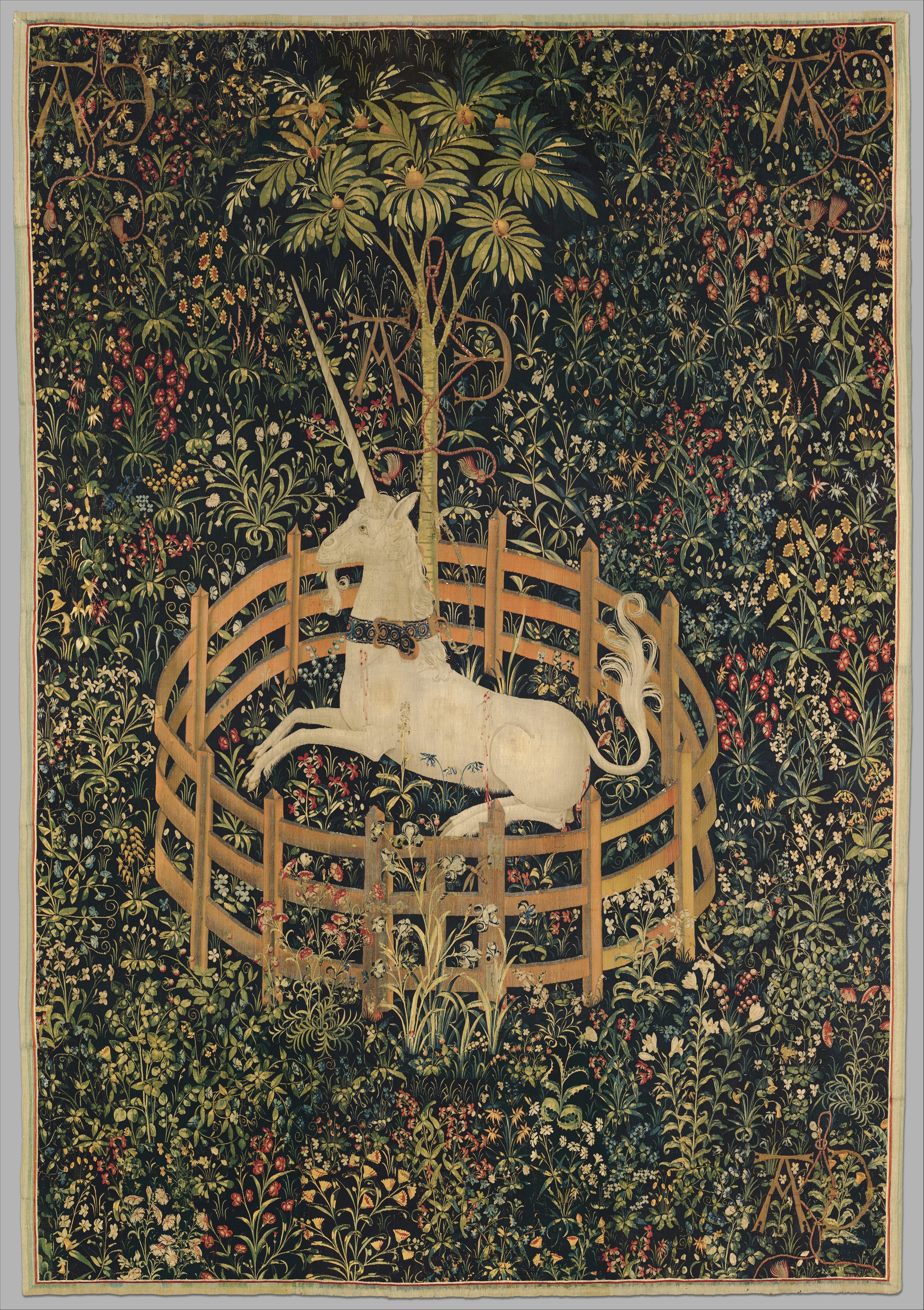 The Unicorn Rests in a Garden (from the Unicorn Tapestries)
When I created Hsing’s Inquisition, I had many ideas for what I should write about. I made a Kanban board that were grouped by idea, draft, edit, and published. This created a backlog of topics that I could always reference whenever I wanted to start a new article.
Ideas would present themselves to me when I was on walks, runs, in the shower, or late at night, and I would do my best to capture them somewhere. Sometimes I would record myself. More often, I would write down the idea in my notes app. From that starting point in my creative funnel, I would take those ideas and place them in the idea section of my Kanban board. The plan was that I would sit down daily and choose whatever idea on the board seemed most interesting at that moment and try to make something out of it.
I realized, though, that this is a scarcity mindset. I created this system because I did not trust that the muse or God or the universe or my subconscious would deliver me anything worth writing about in future sessions. When an idea presented itself to me, I had to hunt it down, capture it, chain it, and lock it in a cage like the unicorn from the Unicorn Tapestries.
I debased the artistic process and ultimately ruined the ideas before they had a chance at life. After receiving them as gifts from the great beyond, I should have treated them with more respect. Instead, I plucked them from the earth, like Vronsky1, only to kill something beautiful in the process. When I revisited them at my desk, they were already dead.
Years ago, I was at a board game night with friends that I went to high school with. One particular friend always seemed to win, no matter what game we were playing. He clearly played a lot of board games with his wife but there was something more to his success than just practice. I’m a pretty competitive person so if there was a secret formula that he was using to win, I wanted to know about it.
“What’s your strategy?”
“I don’t have a strategy. You’ve just got to take what the game gives you.”
I’m paraphrasing, but it was something incredibly simple and profound (at least to me) in that moment. The exact wording did not matter, the meaning was absorbed.
I had obviously heard platitudes like, “You have to play with the cards your dealt” but the other side of that coin that I never considered was that holding a strategy too tightly actually impedes you from winning altogether. It is beyond making lemonade with lemons: a strategy-less strategy is the optimal play.
This is why at the highest level of competition (chess, math, professional sports) what you’ve memorized (your strategy) eventually stops serving you. The only thing that matters are the specifics of that situation. There are general rules that can get you 80% of the way there, but to win you need to make the correct decisions absent of any strategy. For a sample size of 1, anything is possible.
The same can be said about career and is why it is a mistake to over index on the decisions of extremely successful people. There are likely general principles that are worth considering but Bill Gates only ascends on the waves of the context in which he was born. Parents often push their kids into professions that brought success decades ago, but they undervalue the rapidly-evolving, technology-driven landscape in which their children must compete.
Every time I sit at my laptop, I want to listen for the words that exclaim emphatically “I wish to be written!” and then, without judgment, share them with the world. Ultimately, I am not in control of which words are ready to be shared: my only responsibility is to be as honest as possible. After that, I am merely a conduit (one of billions) for ideas to enter the human realm like Avogadro’s number enables individual atoms to be measured at the human scale.
“He looked at her as a man who looks at a faded flower he has gathered, with difficulty recognizing in it the beauty for which he picked and ruined it” - Tolstoy’s Anna Karenina